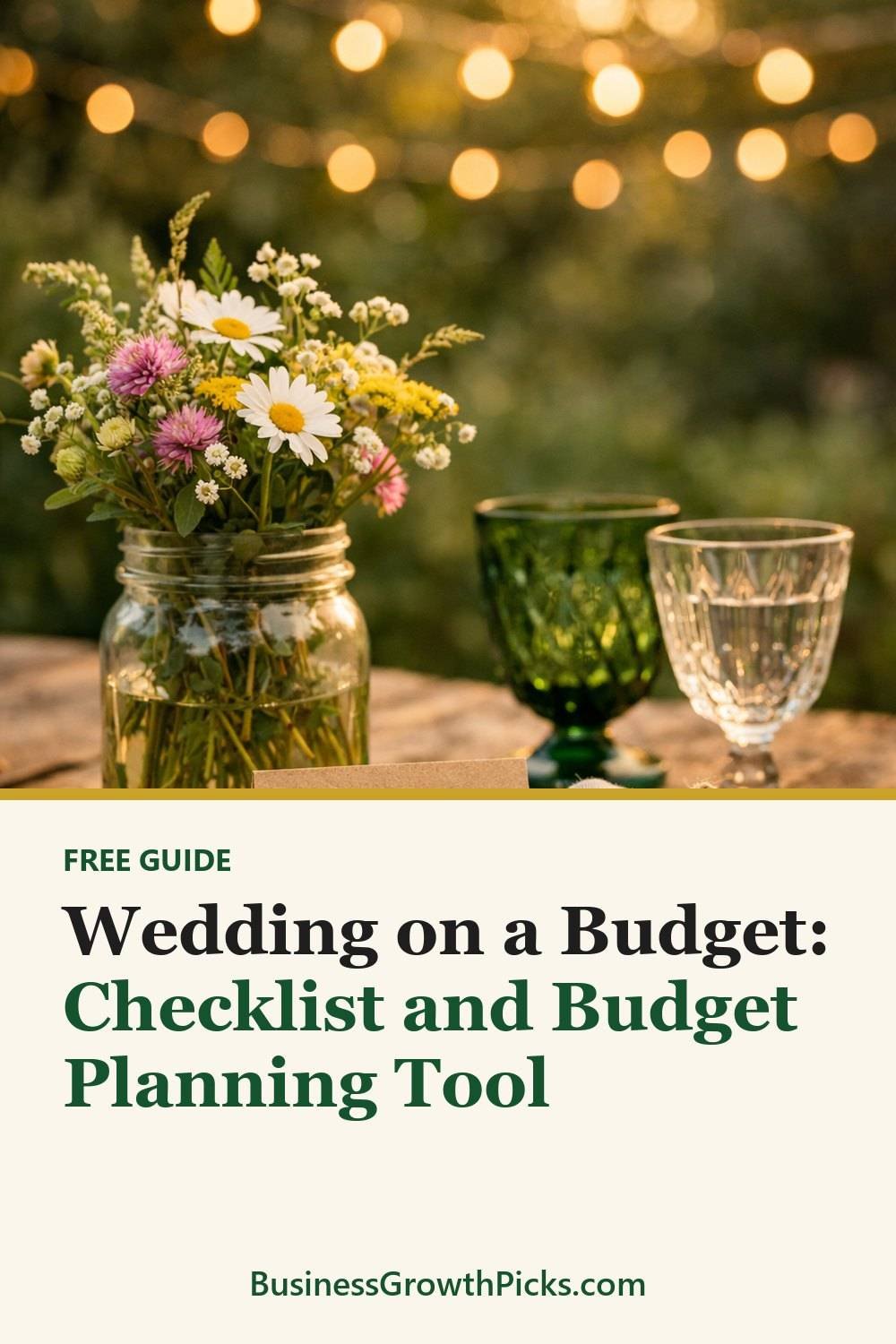
Wedding on a Budget: Checklist and Budget Planning Tool

Planning a wedding on a budget is easier with a clear checklist and a budget planning tool, such as a simple worksheet, to keep every payment in one place. This guide walks through nine steps, from setting your budget before you book anything to leaving room for the extras.
When you're planning a wedding on a budget, the hard part isn't finding cheap stuff. It's deciding what actually matters to you before someone else decides for you. Couples can blow half their money in the first month because a venue tour feels exciting and nobody has agreed on a number yet.
A simple wedding on a budget checklist keeps your decisions in the right order. Here's the small wedding planning checklist I'd use, step by step, with the lessons I picked up along the way.
Short on time? Our top picks: Zola, The Knot, Google Sheets and Joy. See all picks
1. Set your wedding budget before you book anything
This sounds obvious. It isn't. Most couples I know started looking at venues and dresses first, then tried to build a budget around what they'd already fallen for. That's backwards, and it hurts.
Sit down together, and with anyone else chipping in, and agree on one number. Not a range. A range quietly turns into the top end every time. If family members are helping, ask them plainly how much and whether it comes with expectations, like inviting certain people.
Practical tip: Write the final number somewhere you'll both see it, like a note on the fridge or the first page of a wedding budget planner. It sounds silly, but it helps when you're standing in a shop being told "it's only a little more."
2. Pick your top three priorities
You can't have everything be the best version. So pick the things you'll still care about in ten years. For my cousin it was food and photos. She didn't care at all about flowers, so she used grocery store bunches and nobody noticed.
Each of you should make your own list first, then compare. You might be surprised. One of you may care a lot about music while the other assumed a playlist would be fine.
Once you know your top three, spend more there and cut hard everywhere else. That's the whole trick.
Practical tip: Also name your bottom three, the things you'd happily skip. Honestly, favors are on most people's skip list for a reason. Guests leave half of them on the tables.
3. Draft the guest list early
The guest list drives almost every other cost. More people means a bigger venue, more food, more chairs, more invitations, more everything. Cutting ten guests can save you more than any clever DIY project.
Start with a "must invite" list, then a "would like to" list. Be honest about the second one. If you haven't talked to someone in three years, it's okay not to invite them.
This is where things get emotional, so give yourselves time. Don't try to settle it in one evening.
Practical tip: Decide your rule on plus-ones and kids early and apply it to everyone. Making exceptions is what causes hurt feelings later.
4. Look at off-peak dates and times
Saturday evenings in popular months are usually the most in demand, so they tend to cost more. A Friday, a Sunday, or a morning ceremony with a brunch can open up options you thought were out of reach.
A Sunday lunch wedding can be one of the most relaxed kinds of celebration. People weren't tired or rushing, and nobody missed the late-night dancing as much as I'd expected.
Practical tip: When you ask venues for quotes, ask for pricing on two or three different days. Rates can vary a lot, and some places won't mention cheaper slots unless you ask.
5. Get quotes in writing and compare more than one
Never go with the first vendor just because they were nice on the phone. Get at least two or three quotes for big items like the venue, catering, and photography. Then compare them side by side.
Make sure the quotes are in writing and list what's included. One caterer's lower price might not include plates, servers, or cleanup. Another's higher price might cover all of it. You only see that when it's written down.
Read contracts slowly. Look at deposit terms, cancellation rules, and what happens if the date changes. If anything confuses you, ask the vendor to explain or have someone you trust look it over.
Practical tip: Ask every vendor, "Is there anything not on this quote that people usually end up paying for?" Their answer tells you a lot.
6. Be picky about DIY
DIY gets oversold. Some projects really do save money. Others cost more in supplies, time, and stress than just buying the thing.
Good DIY jobs are simple and can be done weeks ahead, like signs or place cards made in Canva, or a basic playlist. Risky ones are anything that has to happen the day before or the morning of, like arranging fresh flowers or cooking for a crowd. You'll have enough going on.
If you're buying lots of small supplies, dollar stores can be handy for things like jars, ribbon, and storage bins. If that's your plan, I've put together a free Dollar-Store Organization Shopping List that you can grab by joining the email list.
Practical tip: Before starting any project, do one test version. If it takes an hour to make one centerpiece, multiply by your table count and decide honestly if it's worth it.
7. Track every payment with a budget planning tool
Small payments are sneaky. A deposit here, a sample there, a quick order for a few decorations. Without a running tally, you'll be shocked when you finally add it all up.
Write down every payment the day you make it: what it was, how much, and what's still owed. Note due dates for final balances too, because those tend to pile up in the last few weeks.
Use whatever you'll actually stick with. A notebook, a spreadsheet like Google Sheets, or a budget planning worksheet. If you want something already laid out, the Wedding on a Budget Planner below this post has pages for exactly this.
Practical tip: Once a week, spend ten minutes checking your tally against your total. It's much easier to fix a small overspend early than a big one later.
8. Hunt for savings without making it your whole life
Coupons, sales, and discount codes (a browser tool like Honey can help find them) can help, especially for things like stationery, decorations, and outfits. But don't let it eat every free evening. Saving a few dollars isn't worth hours of scrolling.
It helps to focus on the bigger purchases, where a discount actually adds up. Also ask friends if they have things you can borrow, like a veil, lights, or a cake stand. People are usually happy to help.
Practical tip: Keep all your codes, sale dates, and savings in one spot so you don't miss an expiry. The Coupon and Savings Tracker, also below this post, works well for that if you like having it on paper.
9. Leave a buffer for the extras
Something will cost more than planned. It always does. Maybe it's alterations, a last-minute rental, tips for vendors, or more postage than you guessed.
Set aside part of your total as a buffer and pretend it doesn't exist. If you don't need it, great. You've got money for a nice dinner after, or a head start on life together.
Practical tip: Make a short list of "surprise" costs to ask about now: tips, delivery fees, overtime charges, and service fees. Knowing about them early takes away a lot of the shock.
Tools worth a look for a budget wedding
You don't need many tools to plan a wedding on a budget, but a few can keep the details in one place. Here are some well-known options that fit different parts of the checklist.
Zola
Suits couples who want a guest list, website and registry in one account. Check which features are free and which cost extra before you commit.
The Knot
Suits couples who like browsing vendors and using planning checklists. Remember that vendor listings are a starting point, so still get your own written quotes.
Google Sheets
Suits anyone who wants a free, flexible budget tracker they can share with a partner or family. You build the layout yourself, so it takes a little setup time.
Joy
Suits couples who want a simple wedding website with RSVP tools. Check how guests will reply and whether it covers the way you plan to collect addresses.
Canva
Suits couples doing simple DIY items like signs, menus and place cards. Check printing options and file sizes before you design anything.
Honey
Suits shoppers buying decorations, stationery and outfits online who want help finding discount codes. Check that a code really applies at checkout before you rely on it.
Etsy
Suits couples looking for invitations, signs or accessories from small sellers. Check production and shipping times, and read each seller's return policy.
Check current plans and prices on each brand's own site before you decide.
FAQ
How much should we spend on a wedding on a budget?
There's no right number. It depends on what you can comfortably afford without going into debt you're not okay with. Start with your savings and any help from family, then build your plan from there with a simple budget planning tool or a notebook.
What's the easiest way to cut costs fast?
Shrinking the guest list usually makes the biggest difference, since so many costs are per person. Picking an off-peak day or time can help a lot too.
Is DIY really cheaper?
Sometimes, but not always. Simple projects done well ahead of time often save money. Big or last-minute projects can end up costing more in supplies and stress.
When should we start planning?
Give yourself as much time as you reasonably can. More time means more chances to compare quotes and find deals, and fewer rushed decisions.
If you're ready to get started, grab the free Dollar-Store Organization Shopping List by joining the email list. Then take a look at the Wedding on a Budget Planner and the Coupon and Savings Tracker below this post if you want a simple wedding budget planner checklist that keeps everything together. Start with step one tonight, and agree on that number.
Printables and tools that can help
Wedding on a Budget Planner
A printable planner with a budget worksheet, guest list tracker and vendor notes for a smaller...
See detailsCoupon and Savings Tracker
A printable coupon log and weekly shopping log to write down what you planned and what you...
See details